




2027 Careers Electric™ Summer Academy Application
FREQUENTLY ASKED QUESTIONS
Downloadable PDF version
Careers Electric Application Page
What is a Careers Electric™ Summer Academy?
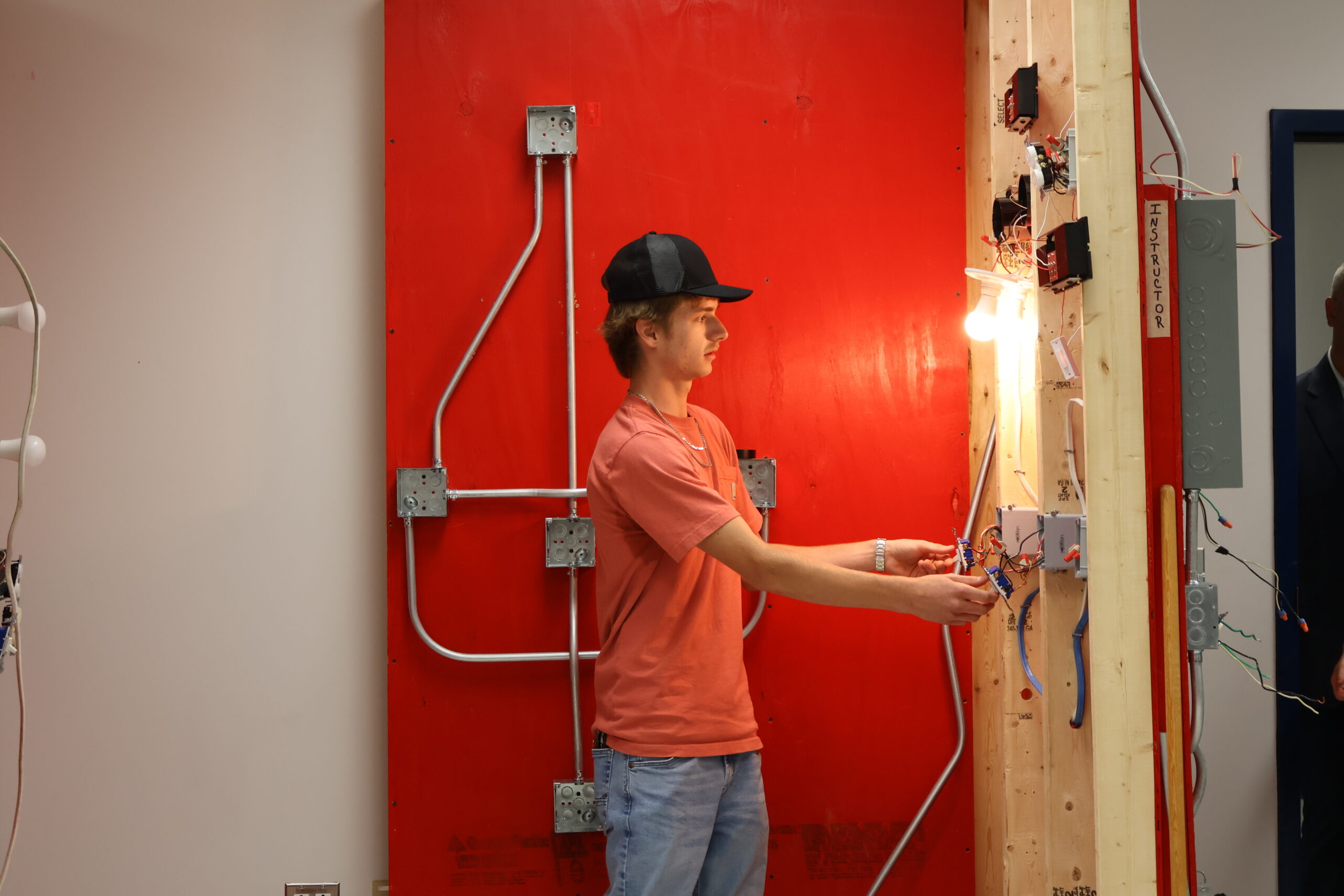
Careers Electric™ Summer Academies are hosted by community colleges for high school students (typically 11th, 12th and spring high school graduates) that deliver electrical coursework, registered pre-apprenticeship, credential attainment, career exposure, and student support during an intensive summer academy. The questions below summarize the Summer 2027 community application and lessons from the 2026 academies.
The Academies are generously supported by the Siemens Foundation and Careers Electric™ Coalition partners.
Eligibility and Program Design
When is the application due?
Applications will be accepted October 1 through NOVEMBER 2, 2026, at midnight.
A technical assistance webinar will be hosted by NCBCE on October 7, 2026, at 3:00 p.m.
Who can apply?
Community partnerships anchored by a North Carolina community college and one or more K–12 school districts may apply. The application must originate with the community college (with identified K-12 partners embedded). The application asks each community to name its implementation team, electrical instruction capacity, CCP pathway, apprenticeship connection, employer partners, and student support lead. Returning 2026 communities and new communities may apply; returning communities also answer questions about pilot-year retention.
How many communities and students will participate?
NCBCE plans to work with up to 24 communities in 2027, with a statewide goal of 480-500 students. Applicants propose their own maximum enrollment, applicant pool, interview volume, and final cohort size (minimum 15) based on local capacity. 2026 pilot academies are encouraged to grow their enrollment by 50-100% for 2027.
How long is the academy?
Plan for an intensive 8–10 week summer academy. Include a preliminary schedule showing instructional days, courses, safety training, employer experiences, and student support. Start and end dates and the weekly schedule should reflect the proposed CCP courses, available instructors, lab space, and employer opportunities/ work-based learning plan.
What must students be able to earn or complete?
The proposal should identify electrical coursework aligned to an approved Career & College Promise (CCP) pathway, safety (OSHA 10 or 30) and/or other industry-recognized credentials, and registration as pre-apprentices with ApprenticeshipNC. Explain how students can continue to additional courses, credentials, an apprenticeship, or employment after the academy. Additionally, many communities added financial literacy, employability skills, mock interviews and other student enrichment to their summer academy schedule.
Must the community have an existing apprenticeship?
It is not a requirement, although the application asks whether the community currently sponsors or offers a registered electrical apprenticeship. It also requires applicants to describe the registered apprenticeship that will support the pre-apprenticeship and how students will be registered. Explain any partner arrangement or development work clearly in the application.
Funding and Eligible Costs
What funding is identified in the application?
The framework lists $450 per student for a designated Student Success Advisor; $350 per student for books, materials, personal protective equipment (PPE), tools, work boots and approved fees; $350 per student in transportation support; a $2,000 student completion stipend; and a $3,000 supplemental instructor stipend. It also describes NCBCE technical assistance and connections to statewide employers.
Which expenses are reimbursable?
The program is designed to have some flexibility. Occasionally, there are expenses that reflect a local community’s needs or requirements. Receipts must be retained and provided for reimbursement. Reimbursement requests can be submitted at one time at the end of the program or can be requested in additional increments to match local needs.
Build a budget within the stated categories and obtain NCBCE approval before treating an unlisted expense, such as meals, employer mentor payments, extra instructor time, or expanded transportation assistance, as reimbursable. Many or most of the pilot communities ensured that students had quality tools and work boots. These are reimbursable expenses.
Additionally, for students who qualify, there is Workforce and Innovation Act (WIOA) assistance to provide additional supports for students who meet certain need criteria. This support should be initiated at the student orientation by inviting your local workforce development board case manager to attend, answer questions, and potentially register students on site.
When do students receive the $2,000 stipend?
The application describes this as a completion stipend. The payment(s) can be split into multiple distributions at the discretion of the grantee. Completion criteria include registered pre-apprenticeship, completed community courses described in the syllabus, and any locally determined work-based learning requirement. The final disbursement will not be reimbursed until all required forms (enrollment, pre-apprenticeship Appendix B, completion/or exit survey) are completed by the student and/or grantee. Questions about completion guidelines should be directed to NCBCE before describing a payment date to students or families.
What attendance policy works best?
Attendance requirements are determined by each college but often reflect individual college requirements. Stricter guidelines can be determined and implemented at the local level. High expectations in this category yielded exceptional results and is a best practice recommended by pilot communities.
Recruitment and Student Success
What should the recruitment plan include?
Identify the high schools and programs you will reach and the roles of CTE educators, career development coordinators, counselors, student organizations, employers, and other local partners. Provide targets for total applicants, interviews, special population recruitment, and the final cohort. Begin outreach early enough to allow applications, interviews, selection, pre-apprenticeship registration, and family orientation before summer.
Should we recruit special populations?
Yes! Achieving the talent development goals laid out by the Siemans Foundation, 25,000 new electrical workers in 10-years, will take a specific effort to include young women and other special populations. We request that you describe specific outreach partners, messaging, events, role models, educators, and employer involvement for this strategy.
How should students be selected?
Describe a consistent student application and interview process, who will participate, and how the team will assess interest, commitment, readiness, and support needs. Earlier screening, teacher or CTE instructor input, and clear expectations about attendance and the pace of summer coursework should be shared and agreed to before final selections are made. Explain how your process will assess students fairly and connect selected students to needed support.
What student supports are expected by NCBCE?
The grant provides $450 per student for a Student Success Advisor. Pilot communities with exceptional completion rates and student outcomes hired an individual specifically for this role. This will be a requirement for the 2027 cohort.
Explain regular check-ins, academic help, attendance monitoring, transportation, tools and PPE, family communication, and other wraparound supports that will be available to students. Include a clear process for contacting a student, making a remediation plan, and following up when attendance, coursework, or personal barriers put completion at risk.
Should we hold an orientation and graduation celebration?
Plan a student and parent / guardian orientation in mid-to-late April to explain the schedule, attendance, coursework, safety, transportation, pre-apprenticeship paperwork, and family expectations. We suggest collecting required forms at the orientation and describing available pathways for each student’s next steps after completion. If the student is younger than 18, programs must obtain parent/ guardian signatures on forms and pre-apprenticeship registration.
Many communities held graduation ceremonies as well. These celebrations were often open to families, employers, students, and faculty. A graduation ceremony is recommended, proved to be a 2026 best practice, and are an approved expense.
Employer Participation
What employer participation is expected?
Identify employers and/or associations already committed or likely to participate in your 2027 Summer Academy. Describe planned career exposure and work-based learning, such as site visits, job shadowing, mentoring, in-lab projects, mock interviews, paid experiences, or apprenticeship and hiring connections. Set out when employers will participate in the academy and how students will transition to opportunities after summer. Don’t forget to consider public sector employers like the school system, City / Town / County government, and the community college.
Application Submission
What support materials need to be included with the application?
The application requests letters of support from:
– Community college president
– K–12 superintendent
– Potential employer partners
The application also requires the following:
– Identification of the lead CTE or community college instructional representative
– A preliminary Summer 2027 schedule
– The proposed CCP course and pathway information
It also asks for implementation leads and written responses on capacity, recruitment, selection, student support, employers, and transitions.
Returning communities also answer the pilot-year performance section.
When and where do we apply?
The application window is October 1–November 2, 2026. The application will be available at the NCBCE website (Initiatives / Careers Electric).
The community college should email kristie.vanauken@nc.gov with their final application and support materials (in one PDF file) by midnight on NOVEMBER 2, 2026:
– Save application and all required documents in one PDF file.
– Name file using your host community college's name. Example: "CareersElectric2027Application_SmithCommunity College_10.27.26"
Be sure to include the following information in the email:
– Name of host community college
– Name, phone number, and email for primary contact regarding application